











How to play Solitaire? Rule, setup and winning tips

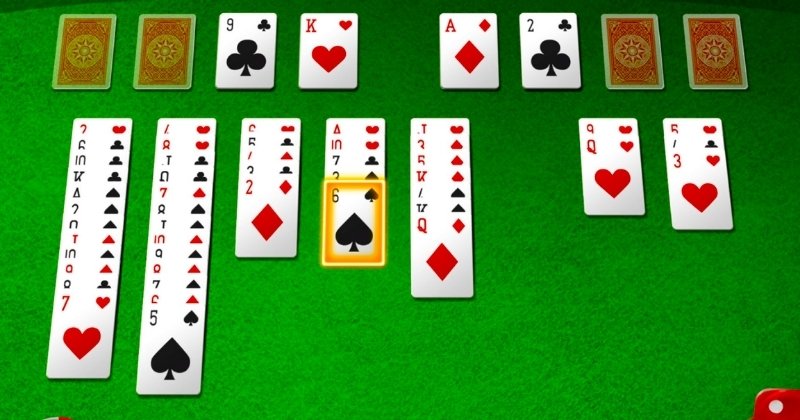
To play Solitaire, arrange cards in descending order and alternating colors in the tableau while building four foundation piles from Ace to King by suit. The basic setup starts with seven tableau columns, a stock pile, and four empty foundation spots at the top. From there, the goal is to uncover hidden cards, move useful sequences, and open space for Kings when possible.
It also helps to understand what winning looks like and which common mistakes slow players down. Read the full guide on Crazy Game Unblocked for a clear, practical answer to how to play Solitaire from setup to victory.
How to play Solitaire starts with the right setup
How to play Solitaire starts with a standard 52-card deck and the classic Klondike layout. If the setup is wrong, the rest of the game becomes confusing, so this is the first thing to get right.
You begin with seven tableau columns arranged from left to right. The first column has 1 card, the second has 2, and the pattern continues until the seventh column has 7 cards. Only the top card in each column is face-up, while the cards underneath stay face-down.
The remaining cards go into the stock pile, also called the draw pile. At the top of the screen or table, leave space for four foundation piles, one for each suit. Those foundation piles will eventually be built from Ace to King.
This kind of rule-based setup question is similar to searches like how many questions on the Impossible Quiz, where players want the exact structure first before they can play with confidence.

How to play Solitaire step by step
How to play Solitaire step by step is simple once you understand the movement rules. You move cards around the tableau, reveal hidden cards, use the stock when needed, and send cards to the foundations whenever possible.
Here is the basic flow of how to play Solitaire:
- Move cards in the tableau in descending order and alternating colors, such as a red 6 on a black 7.
- Turn a face-down card face-up whenever you uncover it.
- Move Aces to the foundation piles as soon as they become available.
- Build the foundation piles upward by suit from Ace to King.
- Use the stock pile when no useful tableau move is available.
- Fill empty tableau columns only with a King or a valid stack that starts with a King.
The most important part of how to play Solitaire is knowing that tableau movement and foundation building work together. You are not just trying to stack cards neatly. You are trying to reveal hidden cards and create better movement options.
For example, moving one card to the foundation might look helpful, but sometimes it is smarter to keep that card in play if it helps uncover a face-down card in the tableau. Good Solitaire play is not only about legal moves. It is also about timing.
In many versions, the stock pile deals three cards at a time, though some digital versions use draw-one rules. The core answer to how to play Solitaire stays the same in both versions: reveal hidden cards, organize the tableau carefully, and build the foundations by suit.
How do you win Solitaire?
You win Solitaire by moving all 52 cards to the four foundation piles in suit order from Ace to King. Once every suit is complete, the game is over.
That means your real goal is not just to make legal moves in the tableau. Your goal is to create a path that lets every card become playable at the right time. A game can look organized and still be far from won if too many important cards remain buried.
The best sign that you are moving toward a win is steady progress in two areas. First, you are uncovering hidden cards in the tableau. Second, you are building the foundations without blocking useful moves below. If both things are happening, your position is usually improving.
A winning game of Solitaire also depends on empty-column control. Empty spaces are powerful because they let you move Kings and large stacks, but they only help when used well. Opening a column too early without a King ready can actually make the layout harder to manage.

What should beginners focus on first?
Beginners should focus on revealing hidden cards before chasing perfect-looking foundation piles. The more face-down cards you expose, the more options you create.
This is one of the biggest mindset shifts in learning how to play Solitaire. New players often rush cards to the foundations because it feels like obvious progress. Sometimes that is correct, but sometimes keeping a card in the tableau gives you more flexibility and helps uncover something more important.
You should also pay close attention to the longest tableau columns. Those columns usually contain the most hidden cards, so they often hold the best chance to improve your position. If you can choose between two reasonable moves, the move that reveals a hidden card is often the stronger one.
Another good beginner habit is to avoid emptying a column unless a King is ready to use it. That empty space is valuable, and wasting it can reduce your options instead of helping you. Unlike an arcade game that rewards fast reactions first, Solitaire rewards patience, sequencing, and careful planning.
What mistakes make Solitaire harder?
Solitaire becomes harder when players make moves that look helpful but reduce future options. The game often punishes impatience more than bad luck.
One common mistake is moving too many cards to the foundation too early. That can trap lower cards you still need in the tableau for color alternation and sequence building. Another mistake is drawing from the stock too quickly before checking the tableau for better reveals.
Players also make the game harder by ignoring column balance. If one tableau column stays clogged with face-down cards while others are already open, your progress slows down. In many cases, the smartest move is the one that opens the board, not the one that looks the cleanest right away.
Learning how to play Solitaire well means learning how to preserve options. Every move should do at least one useful thing, and the best moves often do two at once: reveal a hidden card and improve your structure.
FAQs
If you are learning how to play Solitaire, these quick follow-up questions can help clear up the last few basics.
How do you play basic Solitaire?
Basic Solitaire is played by arranging cards in descending order and alternating colors in the tableau while building four foundation piles from Ace to King by suit.
How to set up 2 player Solitaire?
Two-player Solitaire usually uses a speed-style format where each player has their own layout and plays at the same time. It is a different variation from classic Klondike and follows a different setup.
How many stacks of cards do you start with in Solitaire?
You start with seven tableau stacks in Solitaire. They are dealt from left to right with 1 card in the first stack and 7 in the last.
Can only Kings go into empty spaces in Solitaire?
Yes, in classic Klondike Solitaire only a King, or a valid stack that begins with a King, can move into an empty tableau column.
Do you always win if you follow the rules correctly?
No, not every game of Solitaire is winnable. Good decisions improve your chances, but some deals still cannot be finished.
Conclusion
How to play Solitaire is really about three core ideas: set up the seven tableau columns correctly, build cards in descending order with alternating colors, and move every suit to the foundations from Ace to King. Once you understand when to reveal hidden cards, when to use the stock, and when to save empty columns for Kings, the game becomes much easier to read. With a little practice, how to play Solitaire stops feeling random and starts feeling strategic. For more easy game guides like this, keep reading Crazy Game Unblocked.